How Eutectic Alloys Form Strong, Stable Bonds
Eutectic solder is unique in that it's an alloy with a melting point lower than that of the metals that make it up. That melting point is low enough for attachment processes, but it rises significantly after attachment for thermal stability.
AuSn is one example. It reflows at 280°C, but as the alloy absorbs gold from the substrate and die surfaces, its melting point rises toward that of pure gold and the solder solidifies. Because of this behavior, eutectic solders can form strong, extremely low-void bonds without flux. The solder is usually predeposited onto the die or substrate, or presented as a thin cut sheet of alloy called a preform.
Minimizing Voids to Protect Thermal Performance
Eutectic solder attach can be aided by custom temperature profiles based on the specific application, and setting specific ramp rates and temperatures is key to achieving the best bond. It's also important to keep the environment inert with nitrogen gas to prevent metal oxides from forming, and to remove existing oxides with a low percentage of hydrogen gas added in.
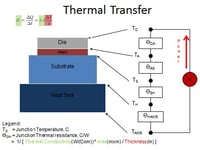
Voids increase die operating temperature by inhibiting efficient heat transfer through the thermal interface material (TIM). They can be caused by surface oxides, trapped gas, and poor wetting. Palomar die bonders can incorporate techniques such as scrubbing to reduce voids caused by trapped gas, while Palomar vacuum reflow systems minimize voids through precise control of formic acid, or forming gas, vacuum levels, positive pressure, and thermal profiles.
Resources for Eutectic Die Bonding
3880-II Die Bonder
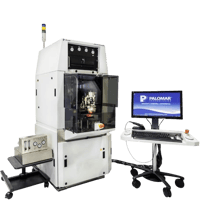
6500 Die Bonder
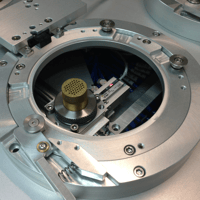
Wafer Die Ejection Systems
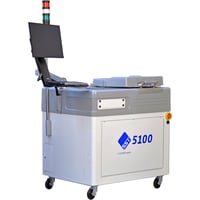
SST 5100 Vacuum Pressure Furnace
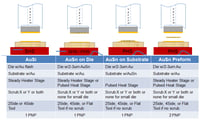
Automated Eutectic Die Attach
AuSi and AuSn Eutectic Die Attach Case Studies