Reliable Bonds for Sensitive and Hermetic Packages
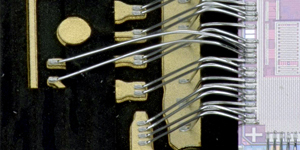
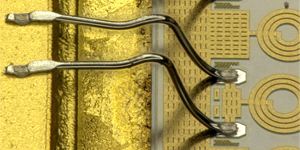
Like a gold wire bond, an aluminum wire bond consists of two attachment points joined by a specific loop shape, and aluminum wire likewise provides a strong electrical path between components. Because it requires no heat, aluminum bonding enables interconnections on temperature-sensitive assemblies whose materials can't withstand the temperatures gold bonding usually requires.
Aluminum wire is also strongly preferred over gold on aluminum surfaces in hermetically sealed packages. The temperatures needed for hermetic sealing can compromise the integrity of gold-on-aluminum (Au-Al) bonds.
Wire Bonding Materials and the Controls They Require
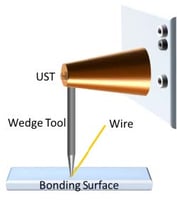
Aluminum wire is commonly used with wedge bonders and, together with gold wire, represents one of the two main material types for wire bonding. Some alloys and other materials are also used in specific applications for their unique properties.
Successful wire bonding depends on the optimal frequency, force, and temperature for each material. Palomar wire bond systems give engineers control over each of these parameters, so the process can be tuned to the wire material and application.
Resources for Gold or Aluminum Wire Bonding

9000 Wedge Bonder
Wedge Bond Process Optimization Method for 1.5 mil Al Wire on Al Bond Pad