The Challenges of High Vacuum MEMS Sealing
Targeted Heat That Protects Sensitive Components
Reflowing the sealing solder takes the right amount of heat, but MEMS packages also contain components that heat can damage. Success depends on precise temperature control and on controlling where the heat is applied.
Controlling Voids to Achieve Hermeticity
Hermeticity, gas permeation, surface desorption, and hydrogen diffusion must all be considered. A hermetic seal requires a solder bond free of voids, and one common source of voids is gas trapped during fabrication of the package and its components. Varying the pressure during thermal processing helps minimize these voids, so the sealing system must be able to reach both very high and very low pressures throughout the process.
Full Getter Activation Without Damaging Heat
Non-evaporable getters must be properly selected and integrated into the device to maintain the required vacuum over its life. Sealing then requires fully activating those getters at high temperature in high vacuum, while isolating temperature-sensitive components from that heat.
The 3150 High Vacuum Furnace is designed to meet this requirement.
Resources for High Vacuum MEMs Packaging
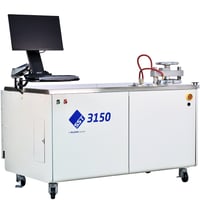
SST 3150 High Vacuum Furnace
Sealing MEMS Devices in Ceramic Packages in a High Vacuum Atmosphere