The Advantages of Wedge Bonding
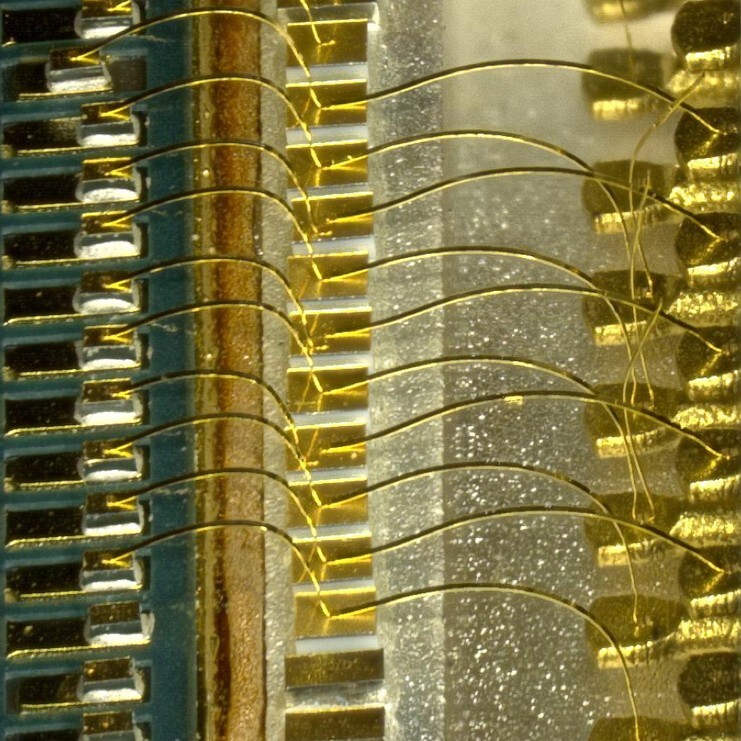
Unlike the capillary on a ball bonder, a wedge tool must be oriented in the direction of each bond. On the Palomar 9100 Wedge Bonder, the entire bond head rides on a theta axis, so it can bond from any angle while maintaining wire tension and keeping wire or ribbon from twisting.
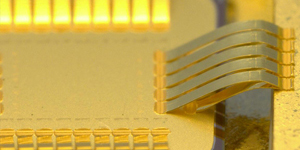
Because wedge bonds are smaller than ball bonds, wedge bonding supports finer-pitch applications. It can also use ribbon in place of round wire, which is critical for designs where round wire alone can't meet the electrical requirements.
When a Wedge Bonder Is the Right Choice
Ball bonding is generally faster than wedge bonding, because the capillary doesn't need to be oriented for each bond. For fine-pitch and ribbon applications, though, wedge bonding's capabilities make a wedge bonder the right choice.
Palomar offers both the 8100 Wire/Ball Bonder and the 9100 Wedge Bonder, so the equipment can be matched to the application's requirements.
Resources for Ribbon Bonding
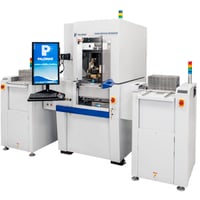
9000 Wedge Bonder
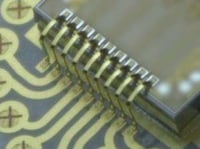
Guide to Modern Wedge Bonding
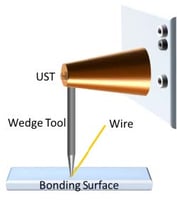
Wedge Bond Process Optimization Method for 1.5 mil Al Wire on Al Bond Pad
Wedge Bond Process Optimization Method for 1.5 mil Al Wire on Al Bond Pad