From Hughes Aircraft to Palomar Technologies:
A Legacy of Precision Assembly Innovation
A Defense and Aerospace Pedigree
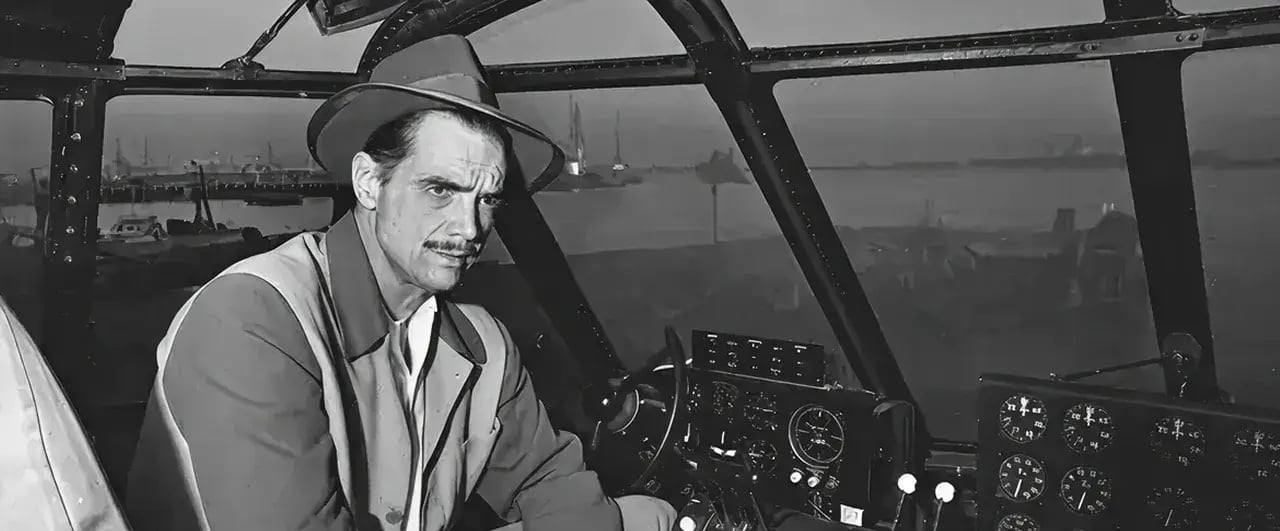
Founded in 1932, Hughes Aircraft Company became one of America's most important aerospace and defense contractors, recognized as an innovator in ultra-high technology from the 1930s through the 1980s, including major advances in automated precision wire bonding, wedge bonding, and high-accuracy component placement.
Palomar's roots trace directly to Hughes' Industrial Products Division (IPD), which developed industrial electronics for Hughes' military and aerospace customers as the company's automatic microcircuit bonder group. When Hughes Aircraft was dispersed in the mid-1980s, its Industrial Products Division including the Assembly and Test Division, was acquired by General Motors.
Early engineering milestones from this era include:
- The 2470-I Automated Wedge Bonder (early 1980s), one of the most innovative products of its kind and a key tool for the defense industry, followed by the 2470-V in 1995
- Advanced wire bonding capabilities developed to support early supercomputer manufacturing (late 1980s)
- The fully automated, large-area 3500-I Die Bonder (early 1990s), followed by the 3500-II automatic component placement cell and the large-area 3470-I Wedge Bonder
Becoming Palomar Technologies:
In 1995, a venture capital group at Citicorp acquired the division from GM and named the company Palomar Technologies. From there, the company's path to independence continued:
- 1995 — Citicorp acquires GM's Industrial Products Division (Assembly and Test) and renames it Palomar Technologies
- 2008 — Local Palomar management leads a buyout from Citicorp, becoming a fully controlled, privately held company
- 2015 — Palomar Technologies acquires SST International, expanding into vacuum reflow and thermal process systems
Today, Palomar remains a privately held U.S. company, owned and operated by local management — independent by design, not by accident.
An Engineering Legacy You Can Trace
Hughes Aircraft's Industrial Products Division didn't just build equipment, it built intellectual property. Of the patents developed during that era, 19 were transferred directly to Palomar Technologies, including:
- Ball Formation on Gold Wire
- Missing Wire Detector
- Bond Signature Analyzer
- Orthogonal Bonding
- Measuring Electrical Interconnect Integrity
That IP didn't stay in a filing cabinet, it became the engineering foundation our teams still build on.
SST Vacuum Reflow Systems:
A Parallel Legacy in Thermal Process
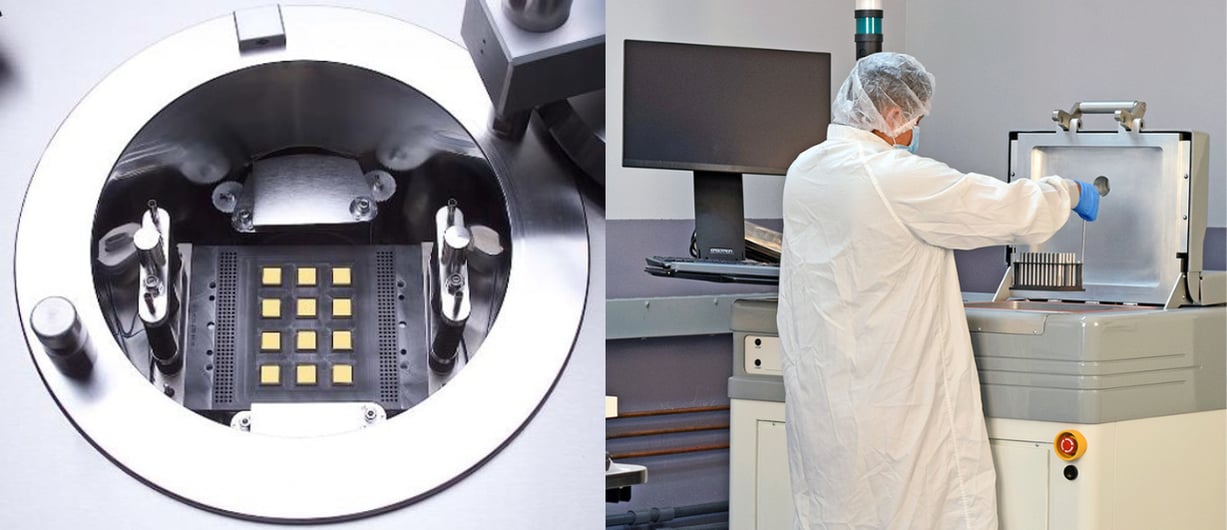
SST's roots go back over 50 years to the original DAP sealer developed by Dix Engineering in 1965 in Costa Mesa, California. The DAP (Diode Assembly Process) sealer was designed to simultaneously perform hermetic glass-to-metal seals on hundreds of axial-leaded diodes per batch. The diode components were loaded into graphite boats which were resistively heated in a vacuum/pressure chamber. The quality of the seals produced far exceeded other methods in use at the time.
In the late 1970s, integrated circuits largely replaced discrete diodes and the demand for DAP sealers diminished. The company was sold, relocated to Downey, California and renamed Scientific Sealing Technology. The new owner focused on finding new applications for the vacuum/pressure/heating technology. Hermetic solder sealing of ceramic IC packages provided a growth opportunity. Meeting new and evolving military specifications for low moisture levels inside the IC package provided a new market opportunity for the old DAP sealer.
For the next 20 years, SST grew its product offerings, broadened its applications portfolio, and expanded into new world markets. The old analog temperature controller gave way to a punch-card programmed DAP-1100, which soon gave way to the CRT display and keypad programming of the DAP-2200. High vacuum systems and wafer bonders evolved from the basic soldering and glass-sealing furnaces. Applications grew in the telecommunications markets for die attach of MMIC (Monolithic Microwave Integrated Circuit) chips and assembly of laser diode packages. New sensor technologies for both commercial and defense relied upon SST's equipment for critical assembly processes.
At the turn of the century, Scientific Sealing Technology became SST International, reflecting the worldwide presence and reputation the company enjoyed. The new 3000 series of furnaces and bonders was released. These utilized modern computer controllers with full data logging and unlimited profiling flexibility. Larger work-area systems were introduced with higher production capabilities including the Model 5100 and the fully automated AVS-4000. The company developed equipment and processes for getter activation and high vacuum sealing of MEMS (Micro-Electro-Mechanical-Systems) packages.